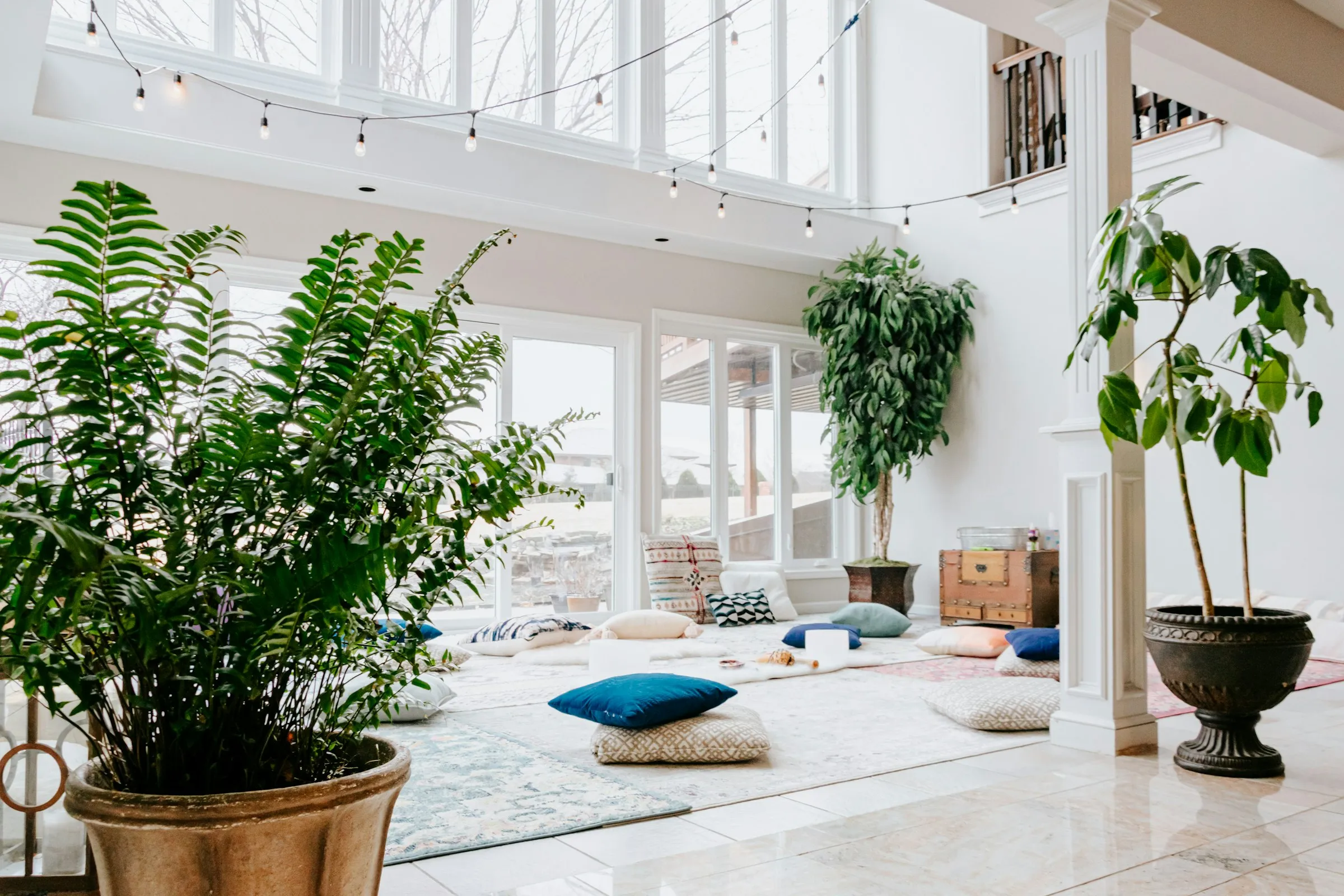
A meditation corner doesn’t need a spare room. It needs a patch of floor you can keep clear, a seat that lets your knees rest lower than your hips, and one thing you enjoy looking at. Everything else is optional.
Japandi, the blend of Japanese and Scandinavian design, is a natural fit for this kind of space. Both traditions favor natural materials, muted colors and a small number of well-made things, each with a clear purpose. The result is a corner that feels calm before you even sit down.
Start with the spot
Choose a corner you can leave set up. If you have to build it from scratch every time, you’ll use it less.
- Look for natural light, ideally near a window you can open.
- Keep it away from screens and work. A corner that faces your desk or the TV will keep pulling your attention there.
- Pick a low-traffic spot, so nobody walks through it while you sit.
As a guide to size, a traditional tatami mat measures roughly 90 by 180 centimeters (about 3 by 6 feet). That’s enough for a cushion, a small low table and room to stretch out your legs, and it’s a useful footprint to mark out even if you never buy a tatami.
Ground it with a floor layer
A defined floor layer is what turns “a corner of the room” into a place. It also protects your knees and ankles.
- A tatami mat is the most traditional choice. It’s woven from igusa rush, smells faintly of grass when new and is pleasant to sit on barefoot. Keep it dry and well ventilated, and vacuum along the weave rather than across it.
- A wool or cotton rug in a muted color is softer and easier to find.
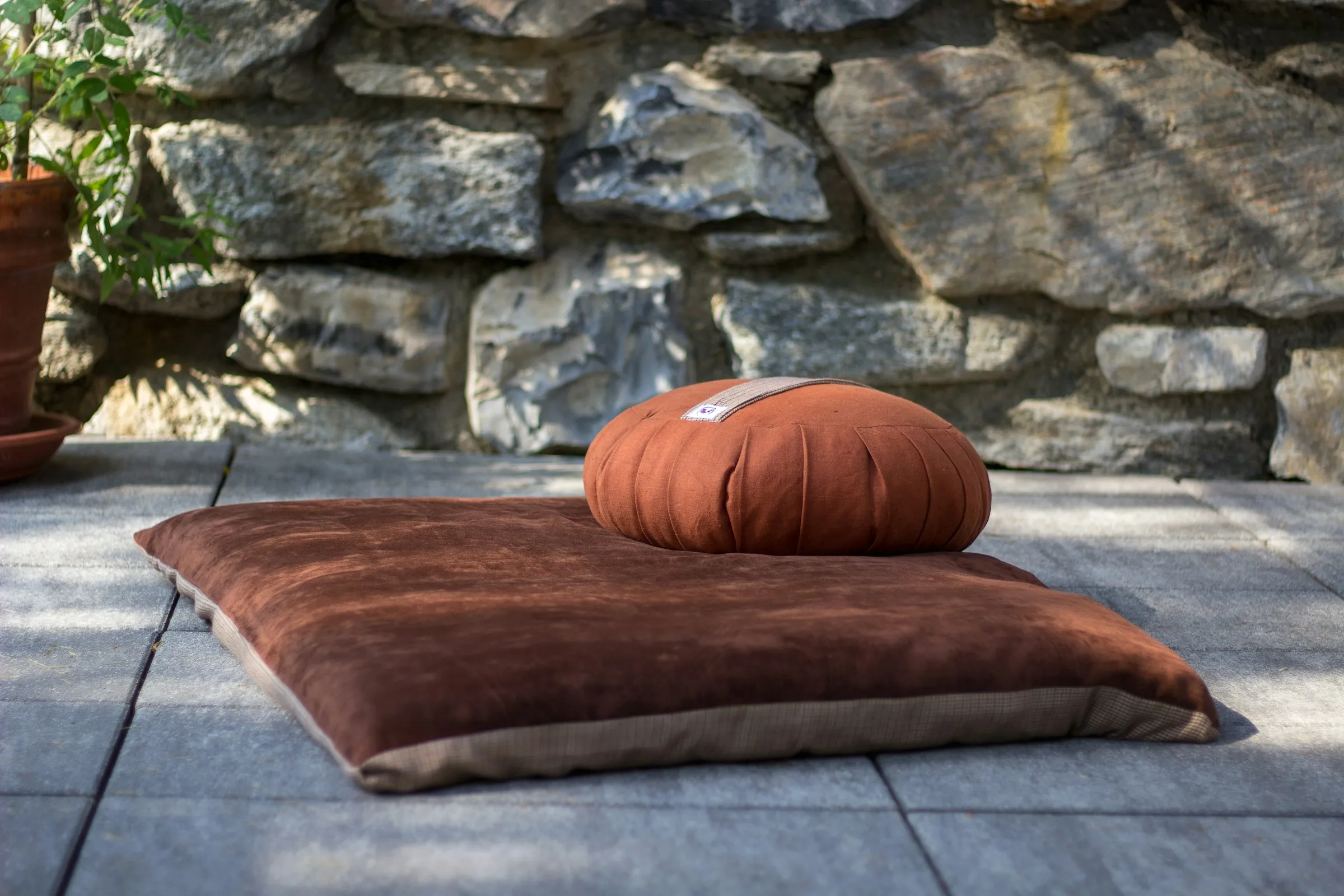
- A zabuton, the flat cushion that goes under a meditation cushion, can be the whole floor layer in a very small space.
Choose your seat
The seat matters more than anything else in the corner, because it decides whether you can sit comfortably for ten minutes or two.
- A zafu on a zabuton is the classic Zen setup: a round, firm cushion to lift your hips and a flat cushion under your knees. Our guide to zafu and zabuton explains how to choose the height and filling.
- A kneeling bench (often called a seiza bench) suits people who are more comfortable kneeling than sitting cross-legged.
- A low chair is a perfectly good meditation seat if sitting on the floor isn’t comfortable for you. Choose one where you can keep your feet flat and your back upright.
Give the eye one thing to rest on
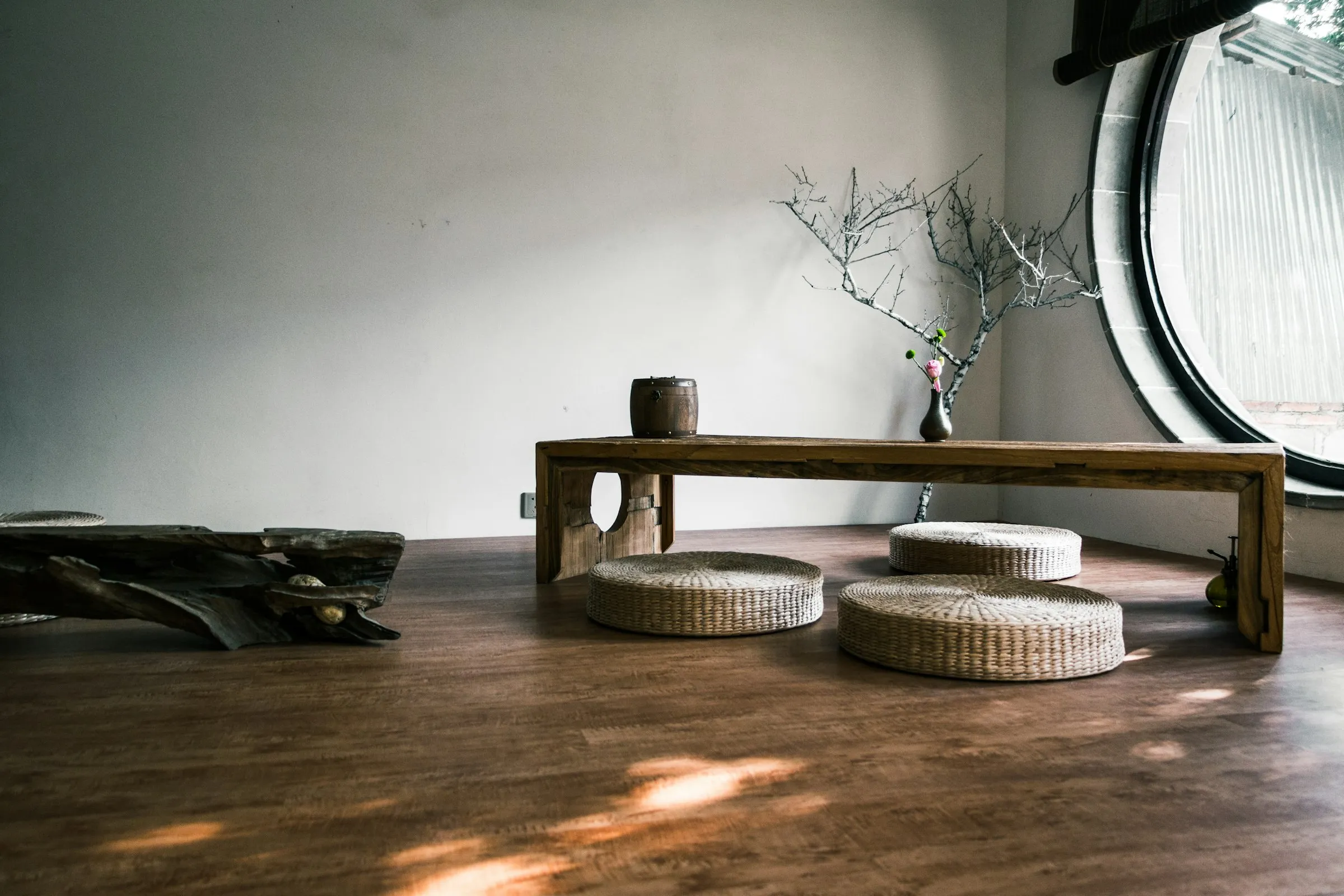
Traditional Japanese rooms often have a tokonoma, a small alcove where a single hanging scroll, flower arrangement or object is displayed and changed with the seasons. The idea translates beautifully to a meditation corner: one object, chosen with care, with empty space around it.
- A single branch or a few stems in a ceramic vase
- A smooth stone, a piece of driftwood or a small bowl
- One print or calligraphy scroll at eye level when you’re seated
A low shelf, a stool or even a windowsill can play the role of the alcove. Resist the urge to add more. The empty space is part of the design.
Keep the light soft and low
Bright overhead light works against relaxation. Instead:
- Use a paper lamp. Washi paper shades, inspired by Japanese lanterns, diffuse light into a soft glow.
- Choose warm bulbs (around 2,700 K), ideally dimmable.
- Light a candle if you like, on a stable, heat-proof surface, away from paper and fabric, and never leave it burning when you leave the room.
Choose natural textures and muted colors
Japandi spaces feel calm partly because of what they leave out: glossy plastic, bright colors and busy patterns. Aim for a small palette of off-white, sand, moss green and charcoal, and a mix of textures: linen, wool, unfinished or oiled wood, paper and handmade ceramics. A little imperfection, like an uneven glaze or a visible wood grain, is welcome. The Japanese idea of wabi-sabi finds beauty exactly there.
Add scent and sound, if you want them
- Incense. Japanese incense sticks are usually made without a bamboo core, and many makers offer low-smoke versions. Use a heat-proof holder, keep a window slightly open, and skip incense if you or anyone at home is sensitive to smoke.
- A bell. A small singing bowl or bell can mark the beginning and end of a sitting. In Japan, a bowl-shaped bell called a rin is often used this way.
- Silence. Often the best sound of all.
Hide everything else
A calm corner needs closed storage. A lidded basket or a simple wooden box holds blankets, a timer, a notebook and spare incense, so the only things on display are the ones you use or love to look at.
Small-space ideas
- Use a folding screen to separate the corner from the rest of the room.
- Treat a windowsill as your alcove, with one plant or object on it.
- Choose a floor cushion that stores flat, so the corner can disappear under the bed when you need the space.
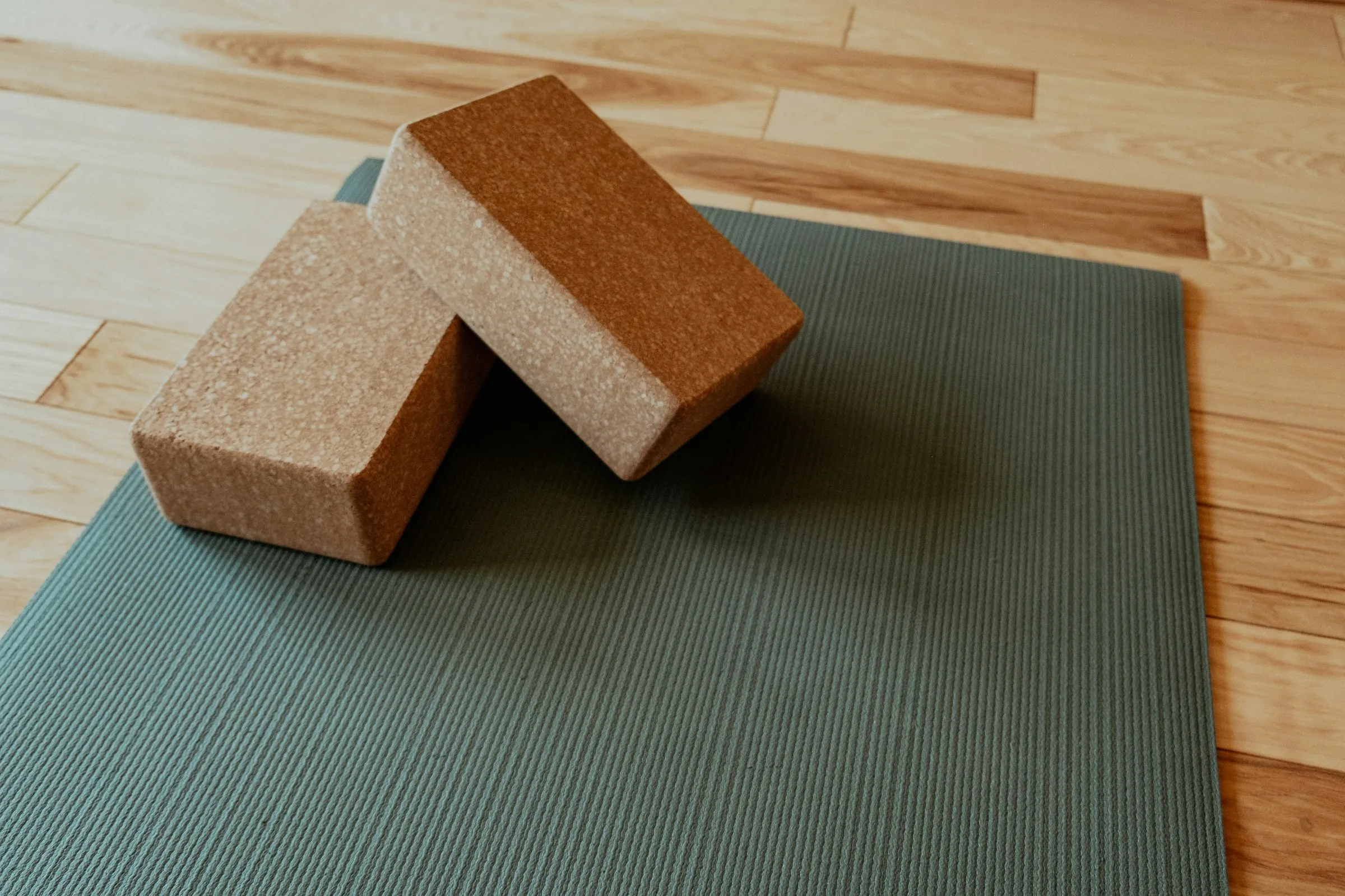
- Hang a hook for your yoga mat so it lives next to the corner, not in a closet.
Your Japandi corner checklist
- A spot you can leave set up, near natural light
- A floor layer: tatami, rug or zabuton
- A comfortable seat: zafu, kneeling bench or low chair
- One object to look at, with space around it
- Soft, warm light
- Closed storage for everything else
Where to go next
Ready to choose a cushion? Read our guide to zafu and zabuton. If your corner will double as a yoga space, our home yoga space checklist covers floor space, storage and props.