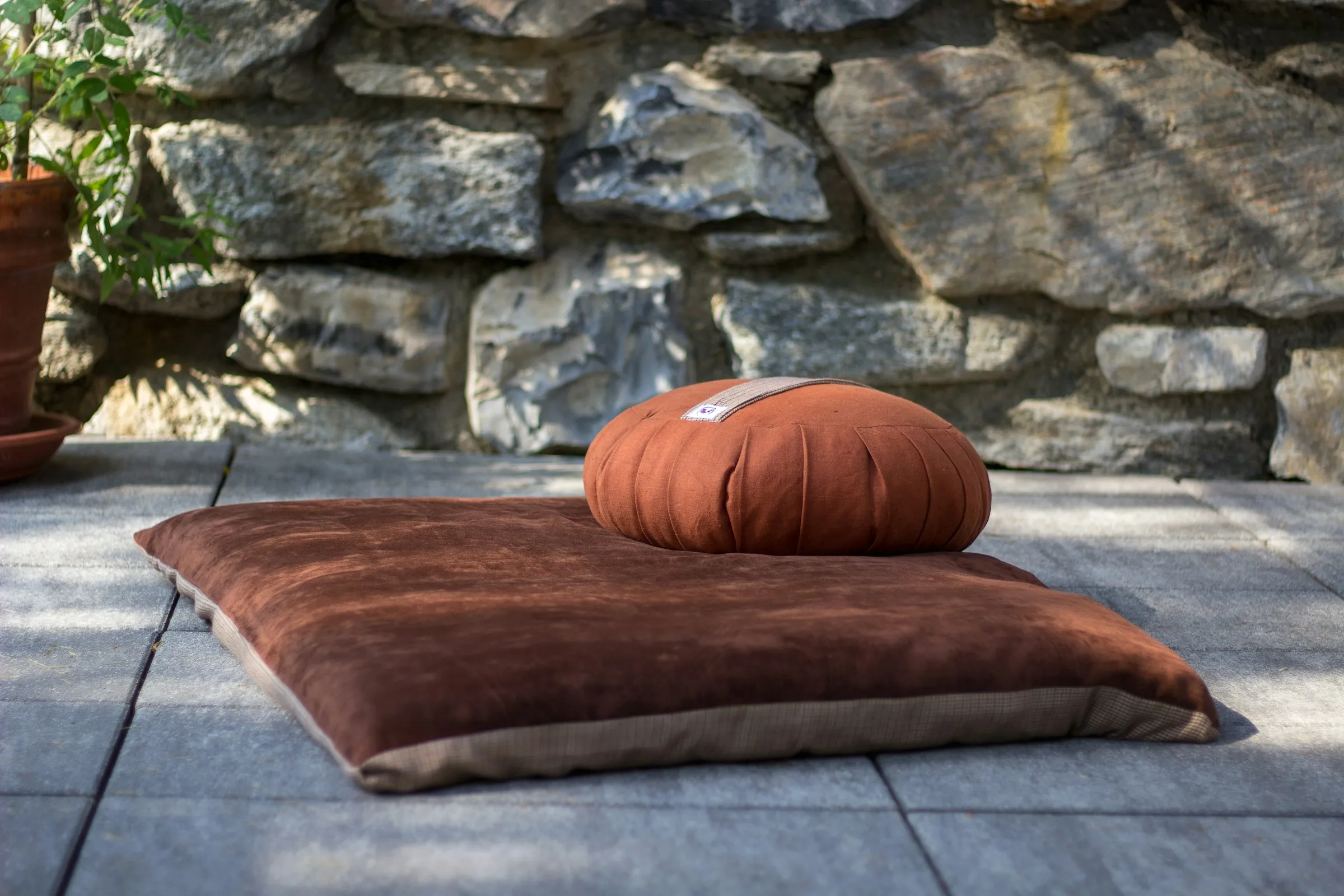
Shop for a meditation cushion and you’ll meet two Japanese words almost immediately. A zafu (座蒲) is the round, firm cushion you sit on. A zabuton (座布団) is the flat, square or rectangular cushion that goes underneath. Together they make the traditional seat of Zen meditation, and they solve two different problems.
What a zafu does
A zafu raises your hips so your knees can rest lower than them. That small change tilts your pelvis slightly forward, which makes it easier to sit upright without straining your back and lets your knees settle instead of floating in the air.
The word itself is a clue to its history: za means sitting, and fu refers to cattail, the plant whose fluffy seed heads were once used as stuffing. Today zafu are usually filled with buckwheat hulls or kapok, and they come in several shapes:
- Round, the classic pleated cushion
- Crescent, cut away at the front so your thighs can slope down more easily
- Rectangular, which some people find more stable
What a zabuton does
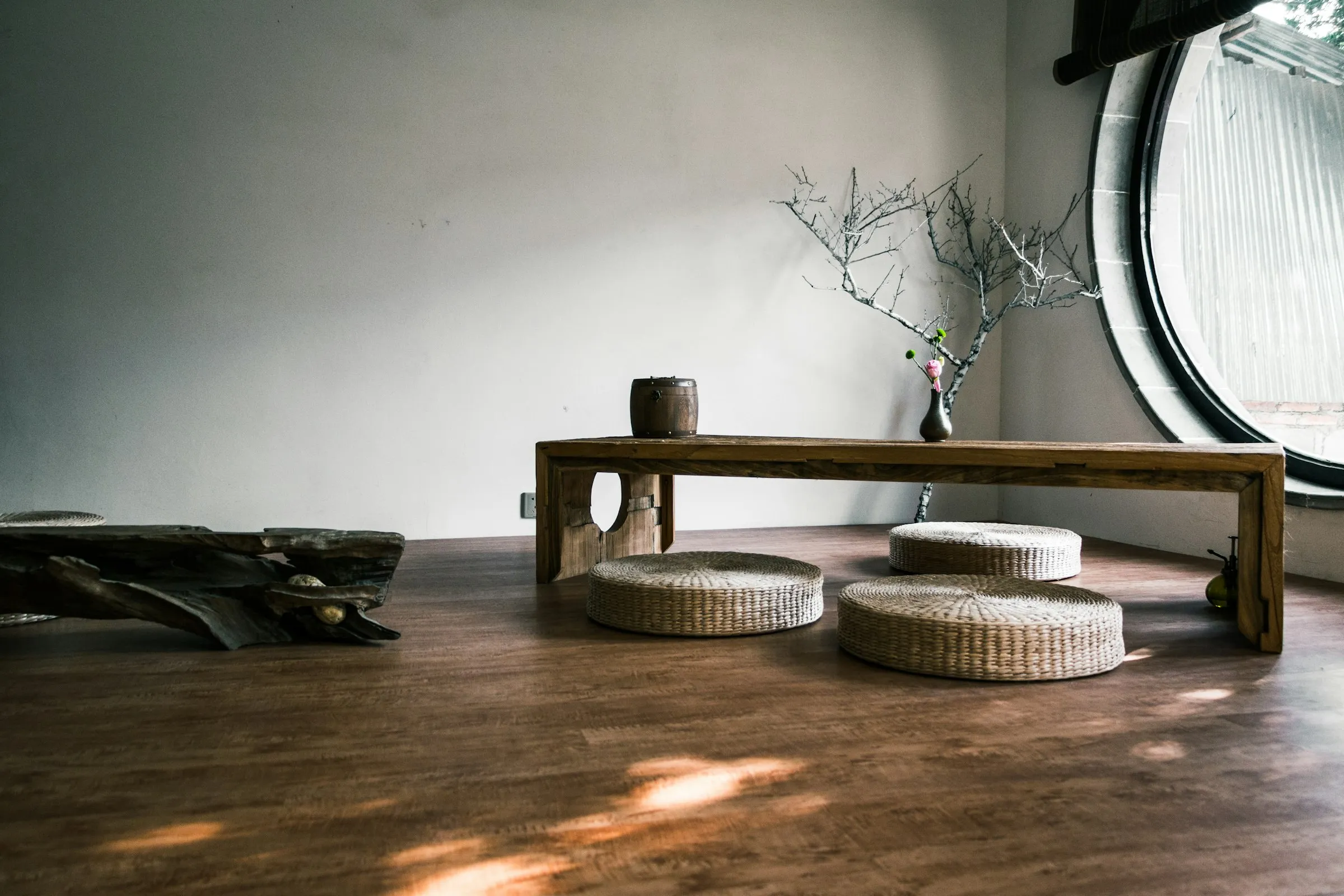
A zabuton cushions your knees, shins and ankles from a hard floor. It’s usually filled with cotton batting and large enough for your crossed legs to rest on comfortably, typically around 70 to 80 centimeters (28 to 32 inches) on each side. In Japanese homes, the same word is used for the flat floor cushions people sit on around a low table.
Do you need both?
- On a hard floor, yes, if you can. A zabuton makes a noticeable difference to your knees and ankles after even ten minutes.
- On a rug or carpet, a zafu alone is often enough.
- In a small space, a zabuton can double as the whole floor layer of your meditation corner.
Fillings compared
Buckwheat hulls are firm and shift to fit your shape. Most cushions have a zip so you can remove hulls to make the seat lower. They’re heavier and make a soft rustling sound when you move.
Kapok, a light, silky fiber from the seed pods of the kapok tree, makes a softer, springier cushion that is quiet and light to carry. It compresses over time, so look for a cover you can open to add more.
If you’re unsure, buckwheat is the more adjustable choice. If you prefer a softer, bouncier seat, choose kapok.
Finding the right height
Most zafu are somewhere between about 13 and 20 centimeters (5 to 8 inches) tall. The right height for you depends on your hips:
- If your knees float above your hips, you need a higher seat, or a second folded blanket under the zafu.
- If you feel tipped forward, the seat is too high. Remove some filling or choose a lower cushion.
- Sit on the front third of the cushion, not in the middle. This lets your pelvis tilt forward and your knees drop toward the floor.
Ways to sit
You don’t need to sit in full lotus to meditate, and forcing your knees into it can injure them. Comfortable alternatives include:
- Burmese position: both shins on the floor, one in front of the other. This is the easiest cross-legged position for most people.
- Seiza (kneeling): knees on the zabuton, with the zafu turned on its side between your feet, or a kneeling bench under your hips.
- On a chair: feet flat, back upright, hands resting in your lap. It counts just as much.
Alternatives to a zafu
- A kneeling bench, often called a seiza bench, takes weight off your knees and ankles.
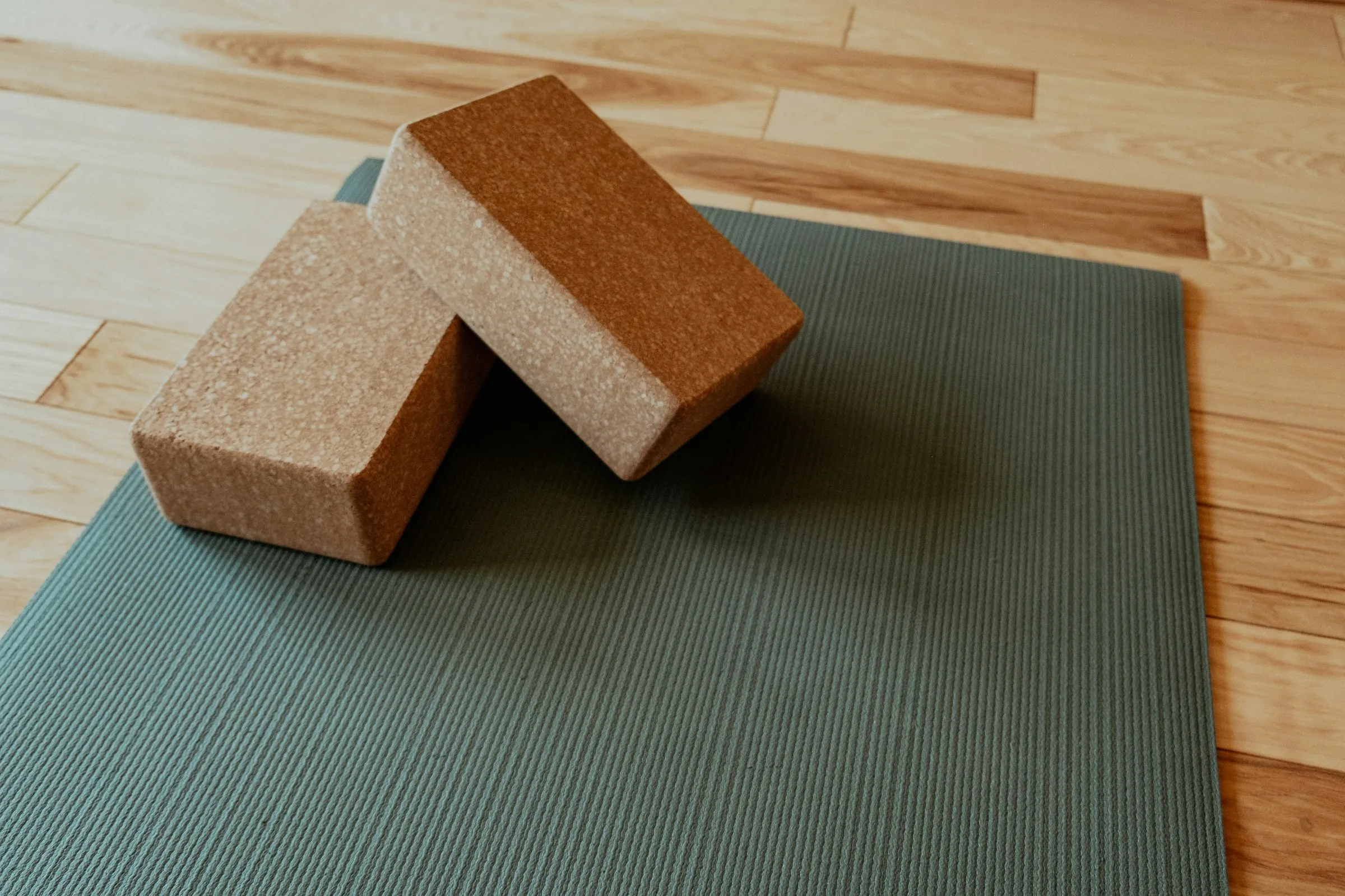
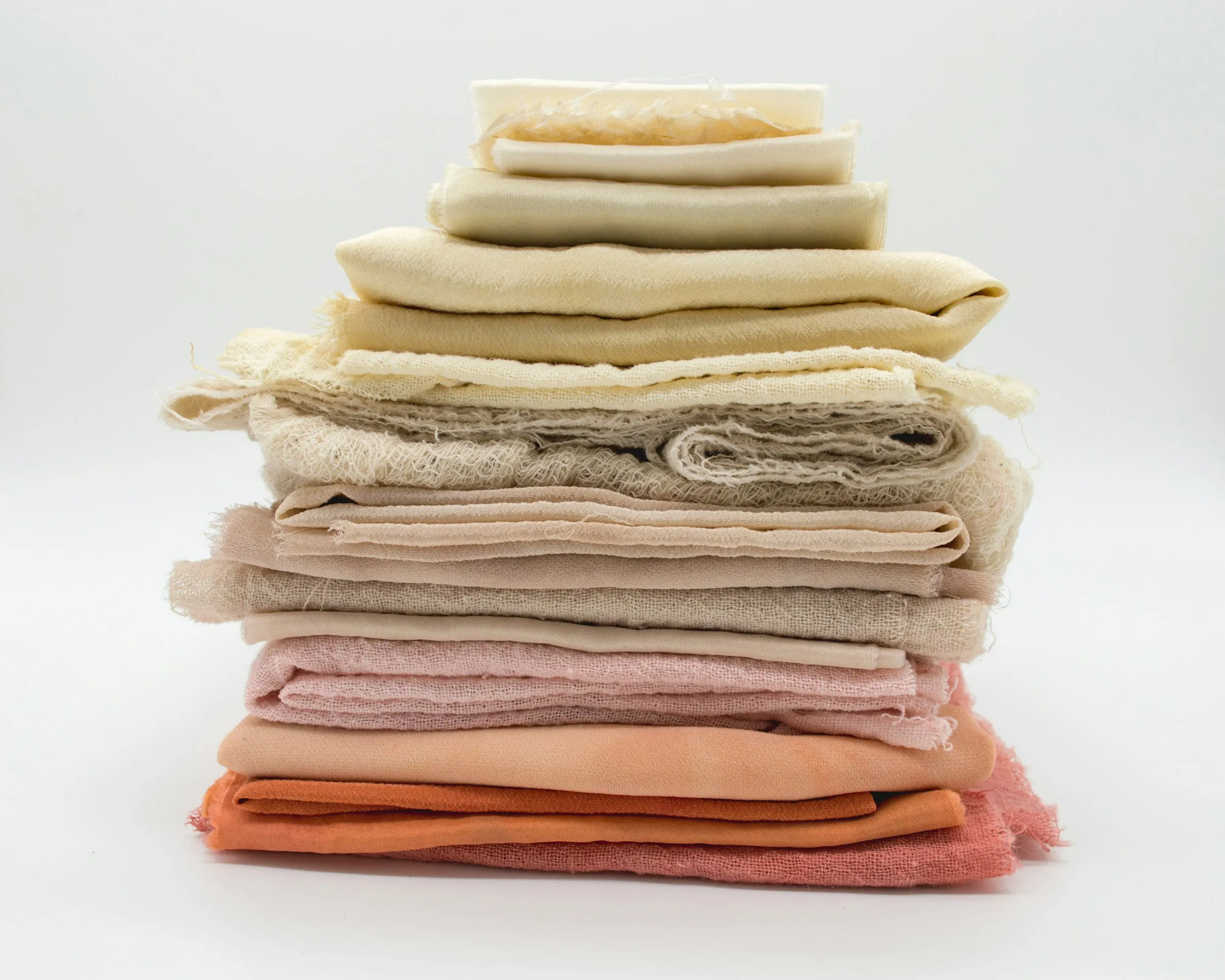
- Folded blankets or a firm bolster work well while you find out what you like.
- A meditation chair with a backrest suits people with back or hip limitations.
Care
- Choose a cushion with a removable, washable cover.
- Air buckwheat cushions occasionally in a dry, airy spot so the hulls stay fresh.
- Fluff kapok cushions regularly and top them up when they start to flatten.
A quick checklist
- Hard floor? Get a zabuton as well as a zafu.
- Want adjustable height? Choose buckwheat hulls.
- Prefer a soft, quiet seat? Choose kapok.
- Knees above hips? Go higher, or try kneeling.
- Look for a removable, washable cover.
Where to go next
Put your new cushion to work in a calm corner of your home: our guide to creating a Japandi meditation corner shows how.