If you buy one piece of yoga equipment, make it the mat. It decides how stable you feel in standing poses, how comfortable your knees are in kneeling ones and whether your hands slide in downward-facing dog.
Practicing at home makes the choice easier in one way: you don’t have to carry the mat anywhere, so weight matters less and you can pick a longer, wider or thicker mat than you would for a studio. This guide walks through the decisions in order.
Start with how you practice
- Gentle, slow or restorative yoga, with lots of kneeling and lying down: choose more cushioning.
- Flowing or standing practice, with balances and transitions: choose a firmer, slightly thinner mat for stability.
- Sweaty practice, or naturally damp hands: prioritize grip when wet.
- Travel: a thin, foldable mat of 1 to 2 millimeters, used on top of whatever floor you find.
Thickness
- 3 to 4 mm (about ⅛ inch) is the all-round standard: enough cushioning for most people, firm enough for balance.
- 5 to 6 mm (about ¼ inch) is kinder to knees and wrists, especially on hard floors.
- Thicker foam exercise mats of 10 mm or more are great for floor exercises, but they feel wobbly in standing yoga poses.
Thicker isn’t automatically better. If you love softness for your knees, a thinner mat plus a folded blanket under your knees when you need it often works better than a very soft mat.
Materials compared
| Material | Grip | How it feels | Good to know |
|---|---|---|---|
| PVC | Good when dry | Dense, smooth, durable | Long-lasting but not biodegradable; some need breaking in |
| TPE | Moderate | Light and springy | Affordable; usually wears out sooner |
| Natural rubber | Excellent | Dense, cushioned, heavy | Rubber smell at first; not for latex allergies |
| PU top on rubber | Excellent, even when damp | Smooth and very grippy | Shows marks and needs gentle cleaning |
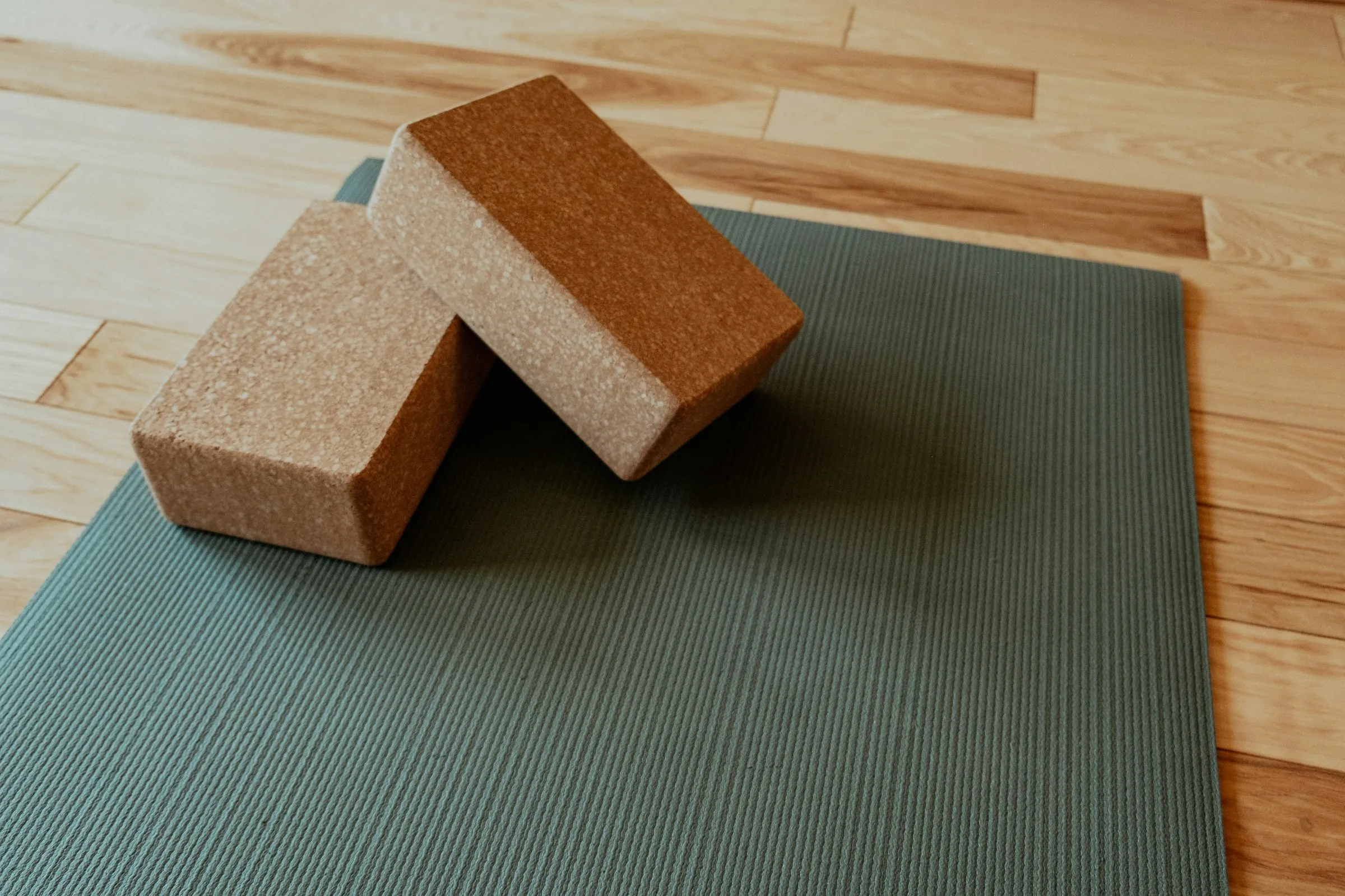
| Cork | Good, improves with moisture | Firm, natural texture | Usually backed with rubber or TPE |
| Cotton or jute | Low to moderate | Traditional, breathable | Little cushioning; can slide on smooth floors |
Two more terms you’ll see: open-cell surfaces (like natural rubber and many PU tops) absorb a little moisture, which helps grip but means they need cleaning more often. Closed-cell surfaces (like PVC and most TPE) repel moisture and are easy to wipe clean, but can feel slippery when your hands sweat.
Size
Most standard mats are about 61 by 173 centimeters (24 by 68 inches). If you’re taller than about 180 cm (5 feet 11 inches), look for a long mat of 183 to 188 cm (72 to 74 inches), so your head and heels both stay on the mat when you lie down. Wide mats of 66 cm (26 inches) or more give extra room for broad shoulders and wide-legged poses, and they’re a pleasure at home where space isn’t shared.
Grip test
If you can try a mat in person, press your palm onto it and slide it forward: it should grip without feeling sticky. Then do the same with a slightly damp hand. That second test tells you most of what you need to know about how the mat will behave once you warm up.
Care
- Wipe it down after sweaty sessions with water and a little mild soap, or the cleaner the manufacturer recommends.
- Check the care instructions. Many natural rubber and PU mats shouldn’t be cleaned with oils, alcohol or harsh cleaners.
- Keep it out of direct sunlight. UV light breaks down natural rubber and fades most surfaces.
- Let it dry completely before rolling it up.
Budget
Prices change, but mats tend to fall into three broad bands:
- Budget mats, usually TPE or PVC, are fine for gentle home practice and for finding out what you like.
- Mid-range mats in natural rubber or cork offer noticeably better grip and cushioning.
- Premium mats, usually PU-topped rubber or professional-grade PVC, cost more but can last for years of daily use.
Brands worth knowing
- Manduka makes the PRO, a dense PVC mat known for its durability, as well as natural rubber mats in its eKO range.
- Liforme mats have a PU surface on a rubber base, with alignment markers printed on top.
- JadeYoga is known for natural rubber mats with strong grip.
- Gaiam offers a wide range of affordable mats and props, which makes it a common first choice.
Quick picks by need
- Sensitive knees and a hard floor: a 5 to 6 mm mat in natural rubber or dense PVC
- Sweaty hands: a PU-topped or cork mat
- Environmental priorities: natural rubber, cork or jute, and a mat you’ll keep for years
- Tight budget: a 4 to 6 mm TPE or PVC mat from a reputable brand
- Tall: a long mat of 183 cm (72 inches) or more
Where to go next
Once you have a mat, our home yoga space checklist helps you set up the rest of your practice space, including props and storage.