You don’t need a spare room to practice yoga at home. You need enough clear floor, a surface that doesn’t slip, a few props within reach, and fewer things competing for your attention. This checklist covers each of those, in the order you’ll need them.
How much space you need
A standard yoga mat is about 61 by 173 centimeters (24 by 68 inches). To stretch your arms and legs out in every direction, aim for a clear area of roughly 2 by 2.5 meters (about 6½ by 8 feet).
Before you settle on a spot, look up. Raise your arms overhead and check for ceiling fans, low lamps, shelves and sloping ceilings. Then look around you: you want a little room on each side of the mat for side stretches and wide-legged poses.
The floor
- Hard floors such as wood or laminate are ideal. A mat grips them well and they feel stable underfoot.
- On thick carpet, a firm, thinner mat feels more stable than a soft, thick one.
- On tile or stone, a slightly thicker mat, or a rug under the mat, is warmer and kinder to your knees.
Our guide to choosing a yoga mat covers thickness and materials in more detail.
Light and air
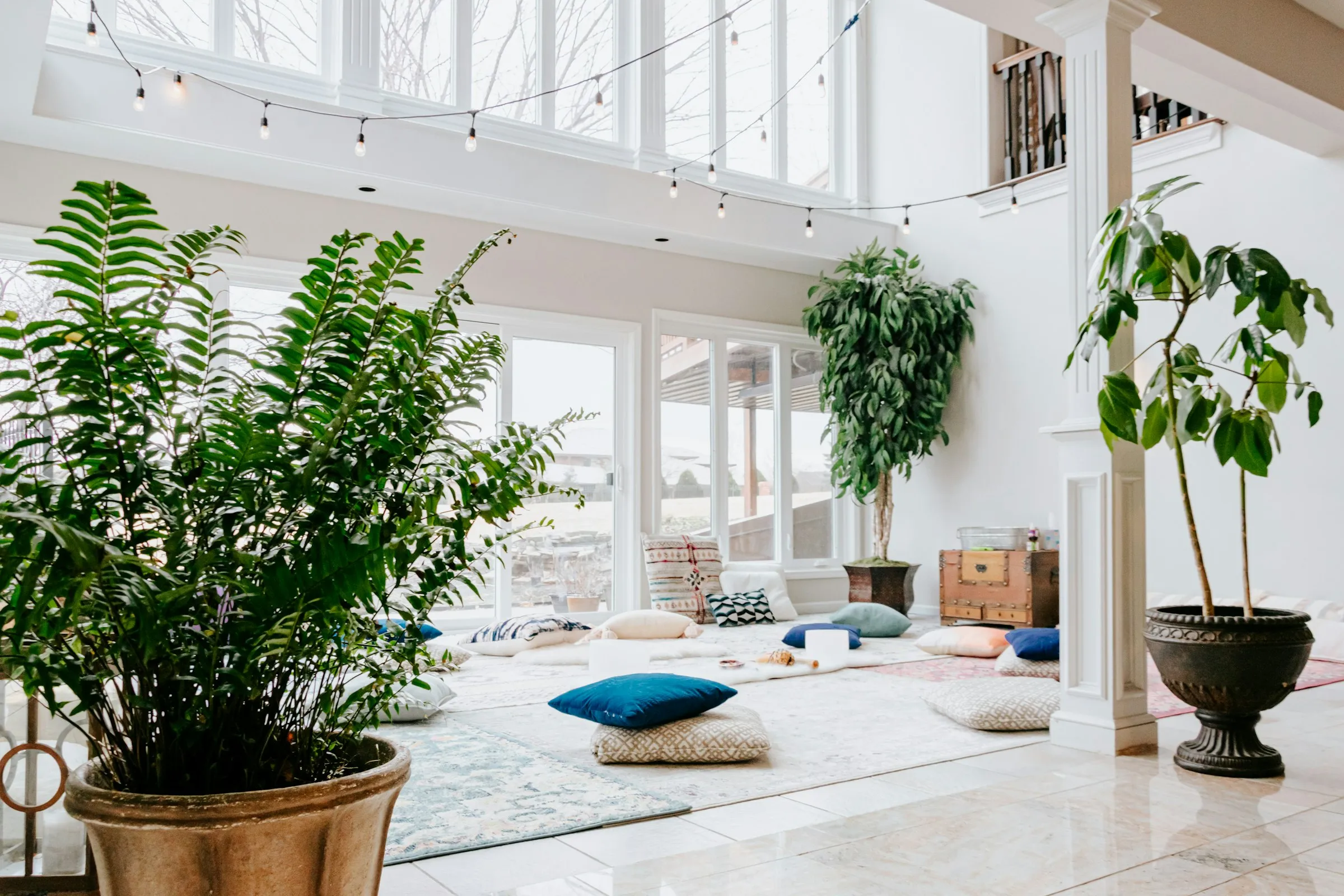
Natural light makes a practice space feel good, and a window you can open keeps the air fresh. For evening practice, a lamp with a warm, dimmable bulb is more relaxing than overhead light. A comfortable temperature is enough: slightly cooler for active practice, slightly warmer for slow, restful sessions.
Props worth having
Start with:
- A mat
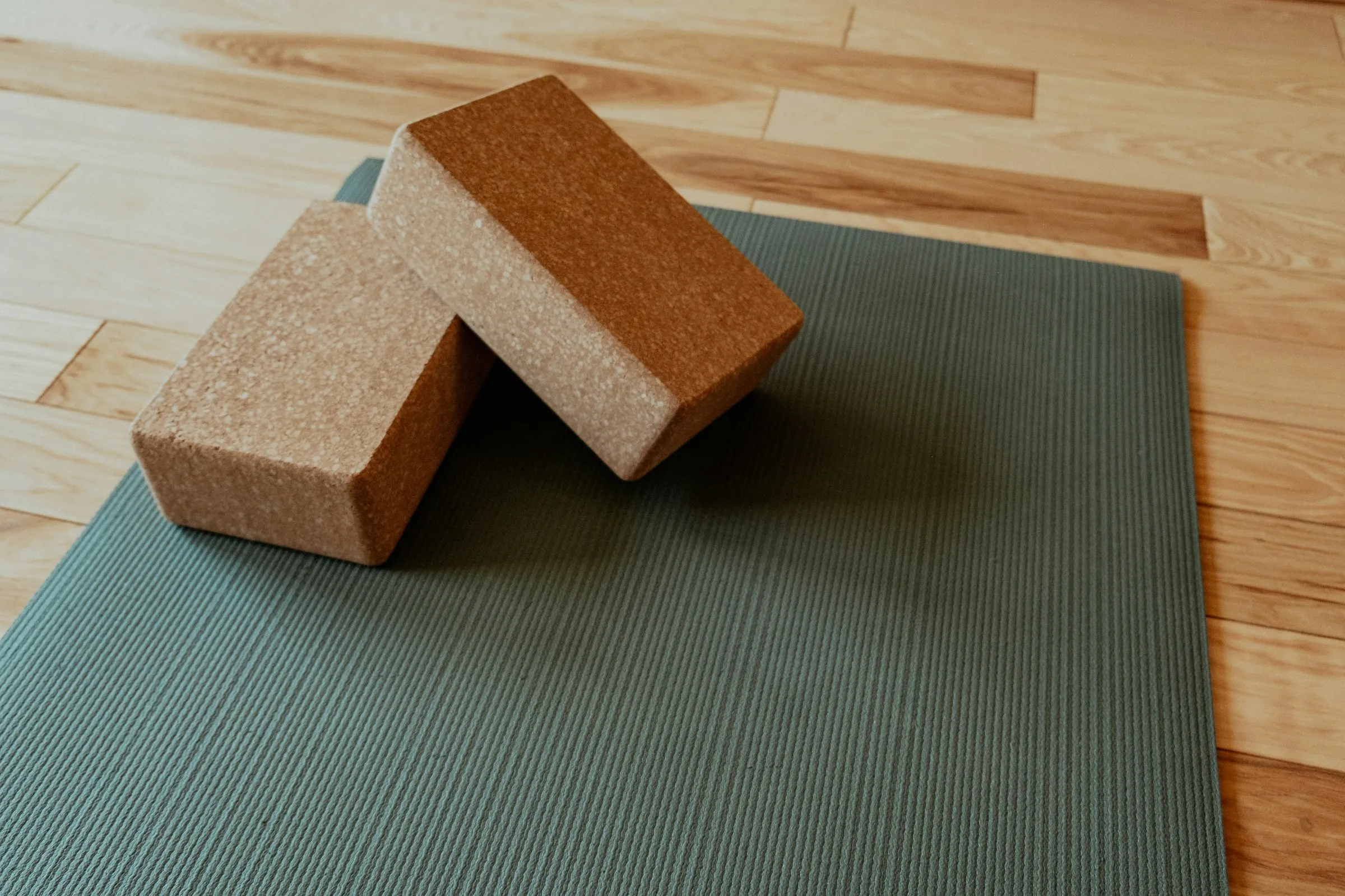
- Two blocks, in cork or foam, to bring the floor closer when your hands don’t reach
- A strap, for stretches where you hold your feet
- A blanket, for padding under your knees and warmth at the end of practice
Add later, if you enjoy slower practice:
- A bolster, for restorative and yin yoga
- An eye pillow, for the final rest
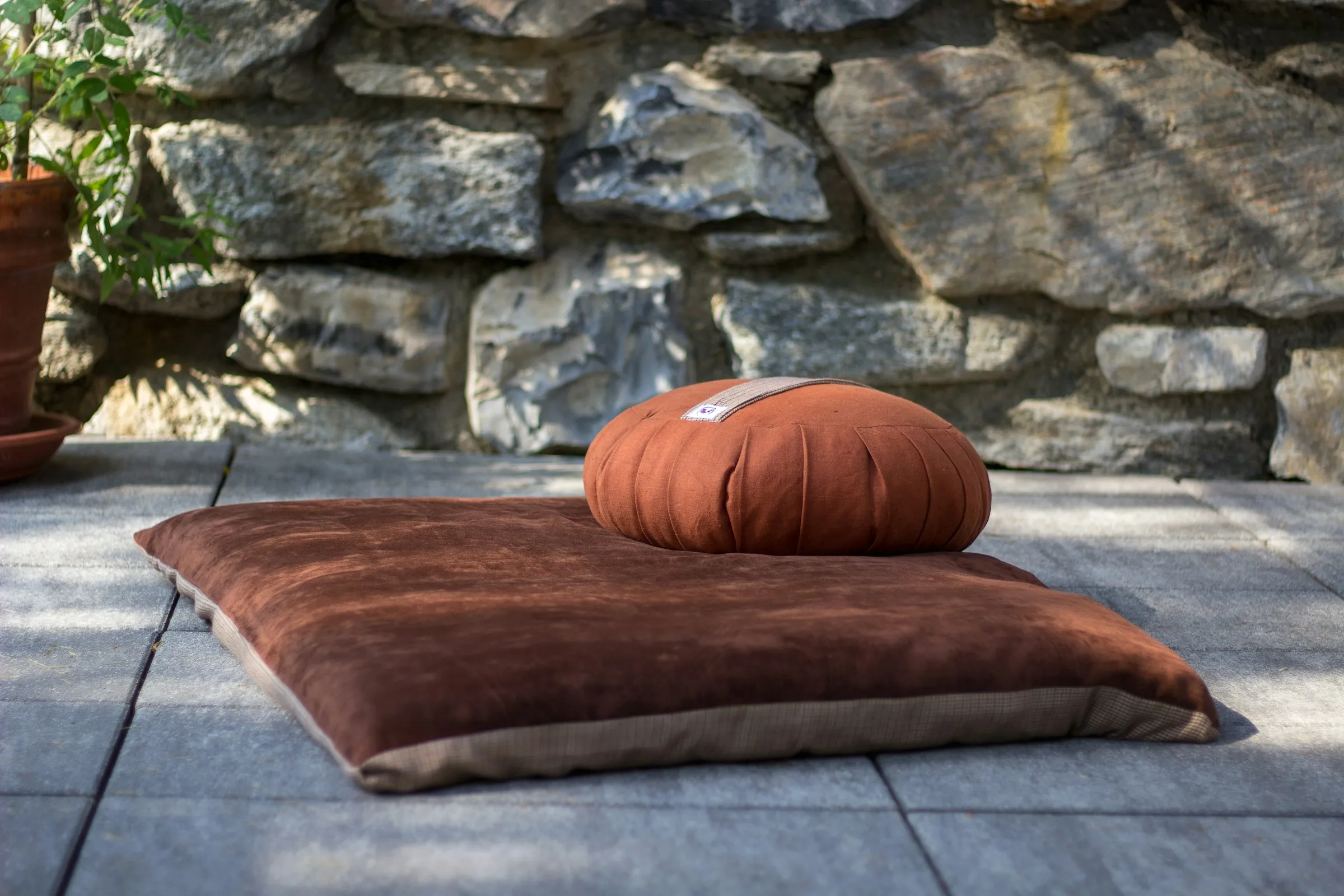
- A meditation cushion, if you sit for meditation (see our zafu and zabuton guide)
Storage that keeps the room calm
Clutter is the fastest way to make a small space feel stressful. Give every prop a home:
- A basket for blocks and straps
- A wall hook or mat rack, so the mat is always ready
- A lidded box or bench for blankets and bolsters
Keep everything in one place, close to where you practice. If it takes more than a minute to set up, you’ll practice less often.
If you follow online classes
- Put the screen at the short end of your mat, so you can glance at it from most poses without twisting your neck.
- Raise it a little, on a low stool or a stack of books, so you can see it while lying down.
- Use a speaker or earbuds if your device is quiet. Listening to cues is easier than watching them.
- Check your Wi-Fi in that spot before your first class.
Make it feel like yours
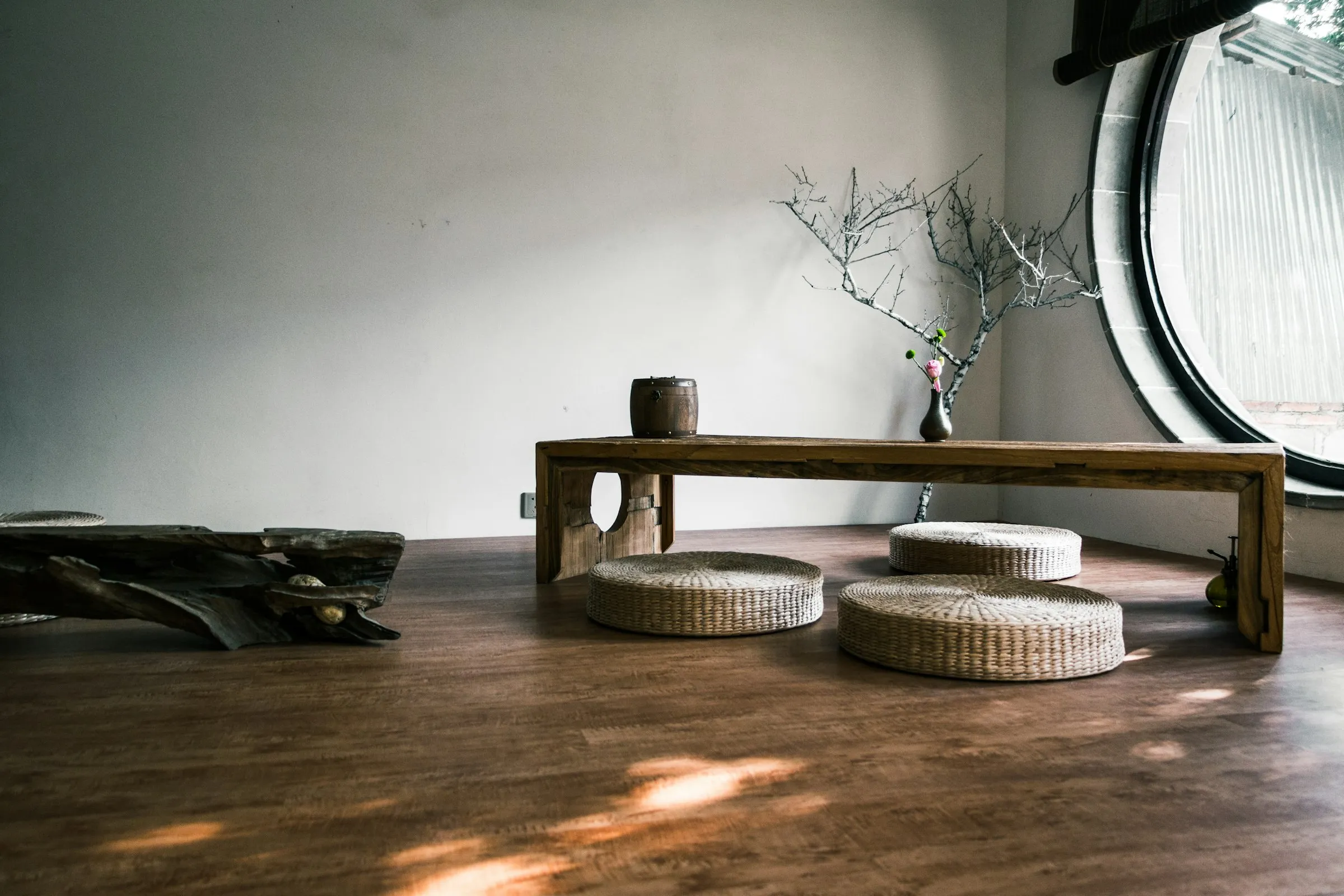
A plant, a piece of art or a candle on a safe, heat-proof surface can make the space feel inviting. Choose one or two things rather than ten. If you’d like the space to double as a meditation corner, our guide to creating a Japandi meditation corner has ideas.
A two-minute reset
End every session the same way: roll up the mat, return the props to their basket, and open the window for a minute. A space that’s ready to use is one you’ll come back to.
The checklist
- About 2 by 2.5 meters (6½ by 8 feet) of clear floor, with nothing overhead
- A mat that suits your floor
- Two blocks, a strap and a blanket
- A basket, hook or box so everything has a home
- Soft light for evenings and fresh air
- A screen at the end of the mat for online classes
Where to go next
Choosing your first mat? Start with our yoga mat guide. Not sure what to wear? Read what to wear for yoga at home.